Thursday, June 20, 2013

50 Shades of Grey film with trilogy

Sam Taylor-Johnson said the book's characters were "under my skin"


Sam Taylor-Johnson has been chosen to direct the big screen version of the smash hit erotic novel 50 Shades of Grey.
It will be the second feature film for the director, who rose to fame under her maiden name, Taylor-Wood.
She previously helmed 2009's Nowhere Boy, the account of John Lennon's youth starring her husband Aaron Johnson.
The 50 Shades trilogy by author EL James has sold more than 70 million copies around the world.
The novels tell the story of the sadomasochistic relationship between billionaire businessman Christian Grey and "unworldly, innocent" literature student Anastasia Steele.
Fifty Shades of GreyThe 50 Shades trilogy took the top three spot's in the UK's book sales chart for 2012
"I am excited to be charged with the evolution of Fifty Shades of Grey from page to screen," Taylor-Johnson said.
"For the legions of fans, I want to say that I will honour the power of Erika's book and the characters of Christian and Anastasia. They are under my skin too."
Producer Michael De Luca praised the director's "unique ability to gracefully showcase complex relationships dealing with love, emotion and sexual chemistry".
"EL James's characters and vivid storytelling require a director who is willing to take risks and push the envelope where needed and Sam is a natural fit," he said.
Taylor-Johnson is also making a movie adaptation of Robert Goolrick's bestselling novel A Reliable Wife.
Before moving into movies, the British director was known as a visual artist and was nominated for the prestigious Turner Prize in 1998.
The script for 50 Shades of Grey is being written by Kelly Marcel, who created the US TV series Terra Nova. BBC

Thursday, June 13, 2013

Flying Bike make it's debut

Flying cars are yet to take off - could bikes have a better chance?
Researchers in the Czech Republic have unveiled a 95kg (210lb) remotely-controlled bicycle that can hover a few metres above ground for five minutes.
Carrying a dummy rider, the electric prototype successfully took off, flew around and landed inside an exhibition hall in Prague.
The bike is powered by two battery-run propellers on the front, two on the back and one on each side.
The machine could help two-wheeled commuters avoid zigzagging through traffic jams - but it is not quite ready to hit the road - or the air above it - just yet.
The batteries only allow for a few minutes of flight before needing to be re-charged.
This is not the first attempt to make a bicycle fly.
"Because the capacity of batteries doubles about every 10 years, we can expect that in the future the capacity would be enough for the bike to used for sports, tourism or similar things," said the technical director of Duratec Bicycles, Milan Duchek.
Flying tricycleThe Flyke has to have a parachute opened at all times in the air
To create the bike, Duratec worked together with two other Czech firms, Technodat and Evektor.
An IT teacher John Carver from Oxfordshire constructed what he called the "Flyke" - a flying tricycle - and flew it across the UK, from Lands End to John o'Groats, for charity.
Registered with the Civil Aviation Authority, Mr Carver's machine is powered by a two-stroke twin propeller motor with a paraglider canopy and is equipped with a parachute, always open when the bike is in the air.
The bike has to be refuelled about every two hours, is able to carry up to 25.4kg (56lb) of luggage, and can reach a flying speed of about 32km/h (20mph). According to Mr Carver's website, the device is now for sale.
Companies such as Para-Cycle sell similar devices as well, but a huge parachute may prove cumbersome for the city commuter.
And in the early 20th Century, among the very first "flying machines" were bicycles with wings attached to the frame - what became known as aviettes.
They did not really fly, but rather hopped above ground, or glided, having been first powered by fierce pedalling.

Robbery in progress

TMZ has obtained EXPLOSIVE VIDEO of 2 Chainz and his crew being robbed at gunpoint in San Francisco this weekend ... and the footage shows the chaotic moments as the rapper and his crew desperately ran for their lives.  

2 Chainz and his entourage were casually walking down the street Sunday afternoon when at least 2 men approached the crew and pointed guns at them ... one in a white shirt, the other in a black hoodie. 

2 Chainz and his crew immediately scattered -- frantically trying to sprint down the street while the gunmen chased after them.

One of the gunmen seemed to be having fun during the incident ... and gleefully skipped after the rapper while 2 Chainz tried to get away. 

During the chase, 2 Chainz stumbles and falls ... and one of the gunmen pounces ... hovering over the rapper with his gun drawn. 

According to police, the bad guys jacked 2 Chainz for his cell phone and wallet. Towards the end of the video, you can see a man running back up the street with what appears to be the loot stuffed under his clothes. 

Under the category: "Who ya gonna believe, me or your lyin' eyes" ... 2 Chainz later posted a tweet denying he was robbed ... saying, "Rule #1 if a rapper gets robbed people usually post items that has been taken." 

As far as the bad guys, so far no arrests have been made.

Can Apple still innovate?

(CNN) -- The big hardware unveil at Monday's Apple press event was the new Mac Pro, a sleek cylindrical desktop computer and the most powerful machine Apple has ever built. It was the announcement that prompted Apple executive Phil Schiller to exclaim, "Can't innovate anymore, my ass."
It also costs thousands of dollars and is way more machine than most people will ever need.
The Mac Pro is aimed at a narrow market of professionals such as photographers, videographers, designers and animators. Since the line was first announced in 2006, the Pro has received relatively few upgrades compared to the rest of Apple's product line. The company has been busy focusing on its hit consumer and mobile devices, leaving many professionals wondering if they were being left behind.
For people using the desktop computers in their businesses, the external look of a Mac is often secondary. So periodic internal improvements to the old tower design were enough to keep them satiated. Others had already abandoned the Pro line as the iMac and MacBook Pro became powerful enough to meet their photo- and video-production needs.
The sleek, rounded new Pro is a design marvel compared to its clunky predecessor.
For the remaining power users, reaction to the new Mac Pro is mixed. And the future of the computer, which is 2.5 times faster than the current model, is still unclear.
First things first: The new Pro is a design marvel compared to its clunky predecessor -- a sleek, black cylinder that bears little resemblance to computers as we've traditionally imagined them.
It's smaller and cannot be expanded and customized as much as the previous system. Apple has built a machine so unique that people who want to add to it will end up building out, adding components like hard drives and PCI cards externally.
To make that expansion possible, the industry must first embrace the Thunderbolt input-output standard.
For example, it's no longer possible to pop in standard video cards. Mac Pro users will have to either get cards that fit the custom shape of the new computer or plug them into the computer using a Thunderbolt 2 connection.
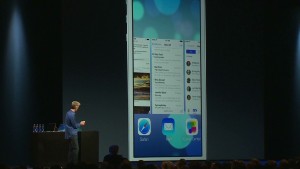
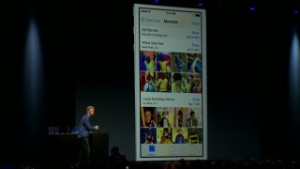
A look at Apple's new operating system
Is there excitement around Apple again?
Apple's iOS gets new look
"It's either going to change the way computers are built, or it will fall by the wayside," said Tony Welch, the creative services director at the Beyond Pix production studio.
Welch is excited about the new product and hopes to upgrade his studio's systems, but he hopes Apple's "risky" bet to depend heavily on Thunderbolt for expansion pushes the companies that make hard drives, PCI cards and other peripherals to support the connection technology.
But Chris Layhe of CLAi, a San Francisco post-production studio, is less impressed.
"Basically, it's two Mac Minis tied together in a cylinder," he said. "It's a load of rubbish. The things that we need in the film and video business, everything's dependent on cards."
Users of the new Mac Pro may want to stray outside Apple's closed system. Layhe, who has been shooting and editing film for 28 years, has seven Macs at his company. He is in the process of building a "hackintosh" -- a custom PC that uses the same cards and boards found in a Mac that can run Mac software, but has more USB slots and can take additional cards. These unofficial systems can cost as little as $1,500 to build.
"We don't want to switch to PC because a lot of the software we use is Mac only, and we've been Mac users for a long, long time," said Layhe, adding that all his backups and stored video are Mac compatible.
Launched in 2006, the Mac Pro is one of Apple's priciest products, starting at $2,499 for the most basic setup. Many creatives who need to squeeze the maximum amount of power out of their machines get custom Mac Pro configurations, which can go as high as $12,000, not including monitors or accessories.
A price hasn't been announced for the new Mac Pro. Monday's unveiling was just an early preview, and the computer won't be available until later this year.
Pro users are a small part of Apple's business. Only 19% of the company's revenue in the first quarter of this year came from Macs. That's just shy of the 21% it made selling iPads and a far cry from the 49% it made on the iPhone.
When Mac Pros were struggling, it was creatives who gave the brand some of its respectability and a cool factor. For now, they are enjoying a rare bit of attention from Apple and hoping for the best.

"We're all glad that they came out with a Pro tower at all," Welch said. "I think we were all fearful that they would abandon the pro community."

Safety in Turkey

Is Istanbul safe for tourists


(CNN) -- Weather, airfare and upcoming local events are criteria that typically factor into travel decisions.
This week, however, far greater concerns are on the minds of potential visitors to Istanbul.
Ongoing local protests, government retaliation and related unrest in the city have many wondering if they should pull the plug on upcoming trips or make any new plans at all.
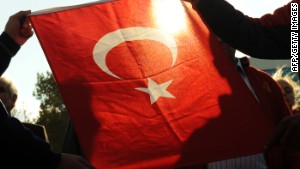
The British government has warned its citizens to avoid demonstrations in Istanbul and Ankara, and the US state department urges travelers to be "alert to the potential for violence".
What began as a small, peaceful protest against a planned shopping mall in the city's Gezi Park has quickly turned into what some protesters now call a "war zone," with police using brute force to quell demonstrations.
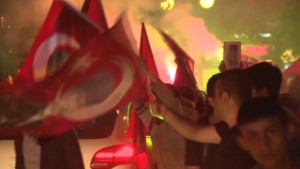
A worldwide audience has watched as police fired water cannons and tear gas at defiant protesters in Taksim Square.
Despite scenes such as this, many tourists around the city say they feel safe and welcomed.\n
Despite scenes such as this, many tourists around the city say they feel safe and welcomed.
Tourism crucial to Istanbul
According to the 2012 MasterCard Global Destinations Cities Index, Istanbul is among the fastest growing tourism markets in the world, receiving 11.6 million international visitors and earning $10.6 billion in travel revenue in 2012.
The Turkish Statistics Institute reports the country's total tourism revenue for 2012 was $29.4 billion. According to an April report by TradeArabia, Turkey expects to receive 33 million international visitors in 2013.
Hünkar Akipek, a young professional who has taken part in the protests, tells CNN that protestors are aware of the possibility that recent events will harm Istanbul's reputation abroad.
Turkey unrest concerns investors
Calls for resignations in Ankara
"Sure we are worried," says Akipek. "I got so many emails, calls from my Turkish and non-Turkish friends abroad.
"I am careful to answer their question of 'What is going on there?' to not make any harm to Istanbul's reputation. This is where we live and where we want to go on living and raise our children. We do not want to damage our home."
"Istanbul, a city that has always been known as Turkey's cultural heart, is turning into a war zone," says Royce Yakuppur, a local who has been to Gezi Park several times in recent days. "Although the feeling of solidarity (among locals) should be applauded as a virtue, it is not enough to overcome the fears of tourists."
Unsurprisingly, local travel agencies report that some travelers have recently canceled trips to Istanbul or are having second thoughts about coming in the next few weeks. Yet "many" are still going ahead with their plans.
No statistics on cancellations are available.
Thousands gathered at Taksim Square after riot police cracked down on protests on June 12 in Istanbul.
Traveler's tales from a week of unrest
By and large, for visitors and locals alike, Istanbul feels safe.
Travelers across the city tell CNN that while they've had to modify some plans, they've felt neither threatened nor endangered.
Colombian tourist Juanita Pardo arrived in Istanbul on June 10. She says she didn't change her travel plans after learning of the protests, despite being warned by family members to avoid the area around Taksim Square.
"There was a lot of traffic, a lot of police, and (some) roads were closed so we chose to walk and couldn't go everywhere we wanted to," she says of touring the city in the midst of the protests. "We had to cancel some plans, like having dinner at Mikla, which is located in Taksim, where we didn't want to go.
"We couldn't see Istiklal Street, which we had heard a lot about."
Kevin Patnode, a 23-year-old New Yorker who has been spent the past four summers in Istanbul as a coordinator for an English language program, arrived in Istanbul on June 4.
"The protests made me want to come even more," Patnode tells CNN.
"Besides Taksim Square, the surrounding areas are untouched by the current situation," he says. "I even visited Gezi Park three times and never felt unsafe. Even though I speak no Turkish, I never felt out of place or that I was unsafe.
"The only change that has occurred has been my social life. Istanbul is a party city and Turks know how to have a good time.
"But after the protests, a lot of people find it inappropriate to be out and going to the bars and clubs surrounding Taksim. It is certainly not frowned upon for foreigners to go out and enjoy themselves, and I've been encouraged to go out and continue to enjoy Istanbul -- however I cannot expect my Turkish friends to come along and join me."
Most of Istanbul's top attractions, such as the Blue Mosque, Hagia Sophia and Topkapı Palace, are located in Sultanahmet, far from Taksim Square.
Referred to as the "new Berlin" by some, Istanbul boasts a growing art scene, with contemporary galleries and museums, such as Salt Galata, Arter and the Istanbul Museum of Modern Art leading the field.
Contemporary Turkish cuisine also draws tourists to Istanbul.
The city's historic peninsula, funky cafes and bohemian neighborhoods feel as exciting -- and welcoming -- as always.
"Istanbul is as appealing as ever," insists one local. "Much like a beautiful woman, but with smudged mascara."

Will soccer ever boot out racism?

The "World Sport presents: Racism in Football" documentary will first screen on CNN International on Saturday June 15. It investigates whether the "beautiful game" can eradicate one of its biggest problems. Click here for showtimes and more videos, news and features.
(CNN) -- Watching dozens of crazed supporters trying to set fire to a stadium makes you question your love of football.
I was standing in Partizan Belgrade's aging ground in Serbia's capital, where a narrow victory over fierce city rivals Red Star had seen the home side clinch the domestic title. It was the most intense and intimidating sporting atmosphere I have ever experienced, with passionate hatred spewing from every direction.
We had traveled to Serbia to film for the "World Sport presents: Racism in Football" documentary -- a project that has somewhat taken over my life in recent months.
Parts of Eastern Europe have a reputation, rightly or wrongly, for harboring racism; supposedly a hotbed for right-wing groups.
When I mentioned to a friend an urge to see for myself, he cheerily suggested going to the "Eternal Derby" as they call it in Belgrade. "You should go and watch Partizan versus Red Star -- it's the most dangerous game in Europe."
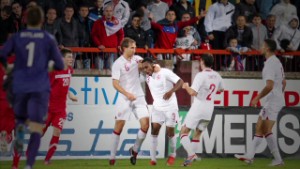
Tackling racism in the stands
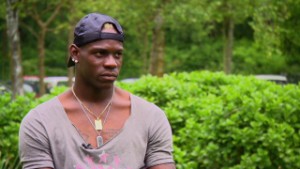
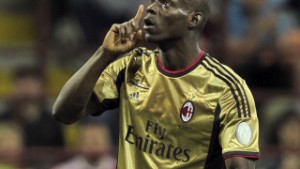
Balotelli: Racism makes me feel alone
FIFA pass racism reforms
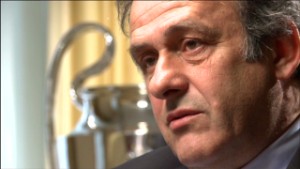
Platini: Bundesliga raises the bar
As it turns out, he wasn't far wrong. Almost every negative aspect humanity can offer was visible that evening. Hatred, intimidation, violence, verbal and physical abuse, arson. It was a melting pot of society's worst traits. At one point, riot police had to break up a mass brawl among three sections of Partizan's own supporters.
These weren't even rival fans -- they were on the same side -- and looked like they were trying to kill each other. At the end of the match, it was the Red Star supporters who started the fires. Amazed, I turned to a policeman. "Don't worry," he smiled back at me. "They always try to burn down the stadium when they lose."
But even in such an extreme environment, one thing we did not encounter in Belgrade was racism. I'll be honest, as a producer putting together a "racism in football" documentary, if it existed, I wanted to capture it on camera.
The game was in a country where racism has endured and been punished in the past. It was about as passionate a local derby as you can imagine, and the away side were fielding two black players in a country where they are a huge minority, and therefore an easy target for ignorant supporters. But not one incident was visible as far as our three-man team could see.
What struck me in that hate-filled environment was how racism and discrimination go well beyond every other form of taboo.
It was socially acceptable for those supporters to be violent; no-one was arrested when fires were started, no-one ejected when the riot police moved in. But racism goes much further than that, and what is pleasing is that football's authorities have begun to recognize as much.
For years, the general public in the UK, where I am from, has scoffed with every paltry fine handed out as punishment by European football's governing body UEFA for incidents of racism.
Until recently, FIFA has done little more to take a stand as ruler of the world game. And although I empathize with that derision through English eyes, I think it's fair to say the levels of sanctions handed out by authorities in the recent past have been nothing short of scandalous.
The example of Danish player Nicklas Bendtner being fined almost three times more for showing commercially branded underwear than the Russian FA was fined for racist behavior by its fans in Euro 2012 is an example often highlighted.
And with good reason. Surely few would disagree about the worrying disparity between the two incidents, no matter in which country you grew up?
Watching dozens of crazed supporters trying to set fire to a stadium makes you question your love of football
Harry Reekie
The event that changed everything, or at the very least sparked genuine momentum, is Kevin-Prince Boateng's walkoff against Pro Patria in January.
In the simplest terms, the public outcry and media coverage it provoked left FIFA with nowhere to turn. World football's governing body had been up against it since president Sepp Blatter told my colleague Pedro Pinto that all racism should be solved with a handshake, despite his insistence those comments were misunderstood.
Boateng's decision to walk off when faced with monkey chants from the crowd finally provoked Blatter to set up an anti-discrimination task force, headed by the impressive Jeffrey Webb, and the recommendations subsequently suggested were then accepted by an overwhelming majority at the recent FIFA Congress in Mauritius.
I have had the fortune of meeting Webb in person on two occasions over the past four months. In Zurich shortly after the task force was set up and again in Mauritius.
So often FIFA has been accused of having a "head in the clouds" attitude towards racism in football. "FIFA don't care," people often say. Well, let me assure you, Webb certainly cares.
He is an intelligent, personable man who carries himself with some assurance. He understands the enormous complexities of the subject and is passionate about making a stand against racism. I feel more confident football will slowly begin to combat racism under his leadership.
Boateng himself is another impressive individual. The day after his walkoff against Pro Patria, the AC Milan star spoke to CNN about what happened. Very few footballers would have had the courage to do that. Subsequently, I have also met him twice in person.
Once at the United Nations in Geneva where he was invited to attend a global day against discrimination as an ambassador, and the second at AC Milan's training ground in May when he popped into the room where we were to talk to Mario Balotelli on the same topic.
He is wonderfully articulate, a fine ambassador for the cause and something of an unlikely hero, a role he says he is just about comfortable with. I sincerely hope his involvement continues in the months and years to come, for it is patently clear the likes of Webb actually listen to what he has to say.
But what will the sanctions imposed by FIFA in Mauritius actually achieve? Even as I sat in that congress hall, I asked myself the same question.
To even begin to answer, it's important to try to contextualize the issue, to understand the overwhelming complexities of racism in general. It is a subject I have lived over the past four months, and the more I read and the more questions I ask, the breadth of the social history and geography involved becomes more dauntingly apparent.
While planning what to put in the documentary, a close colleague suggested how fascinating and relevant the politics of South African football would be.
Another asked how I was going to factor in the tensions and history surrounding football in the Middle East, using the European Under-21 Championship in Israel as a peg. The possibilities are endless. And a hopeless task awaits anyone even attempting to cover it comprehensively.
The method I use to try to separate the issues in my own head is to filter everything into "actions" and "attitudes."
Changing people's beliefs and opinions can only be achieved through education and progressive social integration over generations
Harry Reekie
By "action," I refer to the specific aspect of attempting to combat racism in football. Unquestionably this is something that needed to be addressed by authorities who hither to had been mostly burying their heads in the sand.
The creation of a task force was a positive step forward and through the sanctions imposed in Mauritius, every single national association in world football under FIFA's banner -- 209 to be exact, more than the member nations of the U.N. -- have a framework on which to base punishments.
An incident of racist abuse from a player will now automatically carry a five-match ban, no matter if it occurs in Washington, Warsaw or Wellington.
UEFA and European football advocated minimum 10-game bans at their recent congress in London, and by very definition, suggested FIFA's five-game ruling was not stringent enough.
Blatter publicly lambasted the $65,000 fine handed to Roma by Serie A's governing body Lega Calcio, after the club's fans racially abused Balotelli in May, and he wrote to the association's chairman asking for it to be reconsidered. Until recently, that simply would not have happened.
Balotelli told us in our exclusive interview that he would walk off the pitch the next time he was racially abused. The story we put out was picked up by media organizations in more than 70 countries.
And all that came after he told us he didn't want to talk about racism. Balotelli's antics often let him down. But he has had the courage to stand up to racists both on and off the pitch, and for that, he deserves a lot of praise in my book. The more high-profile stars who speak out, the better.
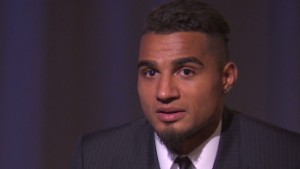
Boateng: Racism in football must end
FARE: 'Erratic' Sepp Blatter should quit
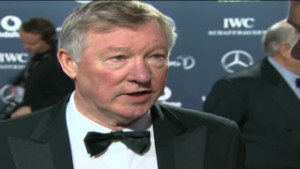
2012: Ferguson: 'Racism still exists'
This increased exposure has gone hand-in-hand with an explosion of coverage via social networks and smaller media organizations.
If racial abuse occurs anywhere, in stadiums, in the bar before the game, in the street -- you name it -- the likelihood nowadays is that someone will be there to film it and post it online. We shouldn't underestimate just how much of a deterrent that is.
All this adds up to an increasing chance of racists being caught, reported and punished. Clubs could now face points deductions or relegation if their fans or players are found guilty of second offenses.
Some supporters may be passionate to be point of fanatical, but they are rarely stupid to the core. If deterrents are put in place -- and, crucially, enforced by national associations -- then I have little doubt the number of racist incidents will slowly begin to decline in years to come.
If examples are made then supporters will quickly become aware that shouting abuse from the stands will directly hinder their team's chances of doing well in the league, winning trophies or qualifying for major competitions, and that is what they really care about.
We will see when the next incident happens if FIFA and UEFA uphold their "zero tolerance" mantra and demand that a national association actually follows through with the punishments now written into FIFA's global rulebook.
But the key aspect for me in the whole issue of racism is that of "attitudes." Racism spreads across the world; it is deep-rooted into the framework of almost every society on the planet.
It is in any conceivable manner far and away a more complex and important subject than sport. And while football can set an example to the world like no other pastime, any suggestion that it can provoke a tangible change in attitudes is unrealistic.
There may have been racism I couldn't hear in Belgrade that night. In the end, what does it matter? What does it prove either way? If I had heard one racist comment, does that make Serbia a racist country? Of course not. Does hearing no racism suggest not one person in that stadium held offensive beliefs?
We're talking about an issue which utterly transcends football and should be mindful not to combine the two. Maybe one day, society in every country may begin to understand that racist views are not acceptable to voice, but changing people's beliefs and opinions can only be achieved through education and progressive social integration over generations.
When we sat down with Boateng at the U.N., he said something which lodged in my mind.
"I have a little son now and I want to take care of things because I want him to grow up in a nice place and not a place where he has to be confronted by racism."

It is a noble ambition, but one that could take centuries to realize.

Japanese stocks enter bear market as yen strengthens

Japanese shares have tumbled after the yen hit a 10-week high against the US dollar, triggering concerns of a drop in exporters' profits.
The Nikkei 225 index fell 6.5% on Thursday. The drop put the market in bear territory, often defined as a 20% fall from a stock index's recent peak.
The index has fallen 22% since hitting a five-and-a-half-year high in May.
A strong yen erodes the value of exporters' profits when they repatriate their foreign earnings back home.
The Japanese currency rose to 94.06 yen against the US dollar in Asian trade, its highest level since 4 April.
Investor sentiment has also been hurt by the Bank of Japan's decision earlier this week to hold back on expanding its stimulus programme.
At the same time, there have also been concerns whether recent aggressive policy moves announced by Japan would be enough to sustain a long term economic recovery in the world's third-largest economy.
Key concern
However, analysts said the biggest concern among investors was the fluctuation in the yen's value.
The Japanese currency has weakened substantially over the past few months after Japanese policymakers introduced steps aimed at boosting growth.

The worst bear market of all-time

It is generally agreed that the father of all bear markets is the Wall Street crash in October 1929, which was followed by the Great Depression.
Thousands of investors lost their savings in the worst stock market crash in Wall Street history, after a five-day frenzy of heavy trading.
At its worst level, the Dow dropped 89% from its high of 386 in September 1929 to 41.22 points in July 1932.
It took the index more than two decades to fully recover.
These steps, which include the central's bank's decision to double the country's money supply, saw the yen fall nearly 30% against the US dollar between November and May.
The drop in the yen saw many leading exporters report a jump in profits and also triggered a stock market rally in Japan.
However, the yen has strengthened over the past couple of weeks, rising more than 8% against the US dollar since 22 May, prompted by concerns that the US central bank may scale back its stimulus programme.
"Whether the yen's strength will persist or not is a key," said Hiroyuki Fukunaga, chief executive of Investrust.
"If it does, companies' earnings will be trimmed, and investors are extremely concerned that the incentive to chase the Japanese market higher will be erased."
Broader falls
Other Asian markets also dipped on Thursday amid uncertainty over the impact of a potential scaling back of stimulus by the US Federal Reserve.
In China the Shanghai Composite Index lost 3.1%, Hong Kong's Hang Seng was down 2.7% and South Korea's Kospi shed 1.4%.
The BBC's Rico Hizon: "This is the third time in three weeks the Nikkei has plunged more than 5%"
The US central bank had introduced quantitative easing, a programme under which it buys bonds to increase the money supply and improve liquidity in the financial system, in an attempt to spur economic growth,
However, speculation has been rife that the central bank may scale back the programme,
This is after the minutes of the Fed's last meeting revealed last month said that "a number" of officials favoured slowing down the Fed's efforts as early as June.
Analysts said that investors are likely to remain cautious until there is more clarity on what steps the US central bank is planning to take.
"Market volatility is expected to stay elevated until the Fed's policy meeting next week, at which we may see with more clarity into the tapering issue," said Yuji Saito, director of foreign exchange at Credit Agricole in Tokyo.
The Federal Reserve next meets on 18-19 June

Twitter Delicious Facebook Digg Stumbleupon Favorites More

 
Powered by Blogger | Printable Coupons